Argentina has a programmatically competitive market
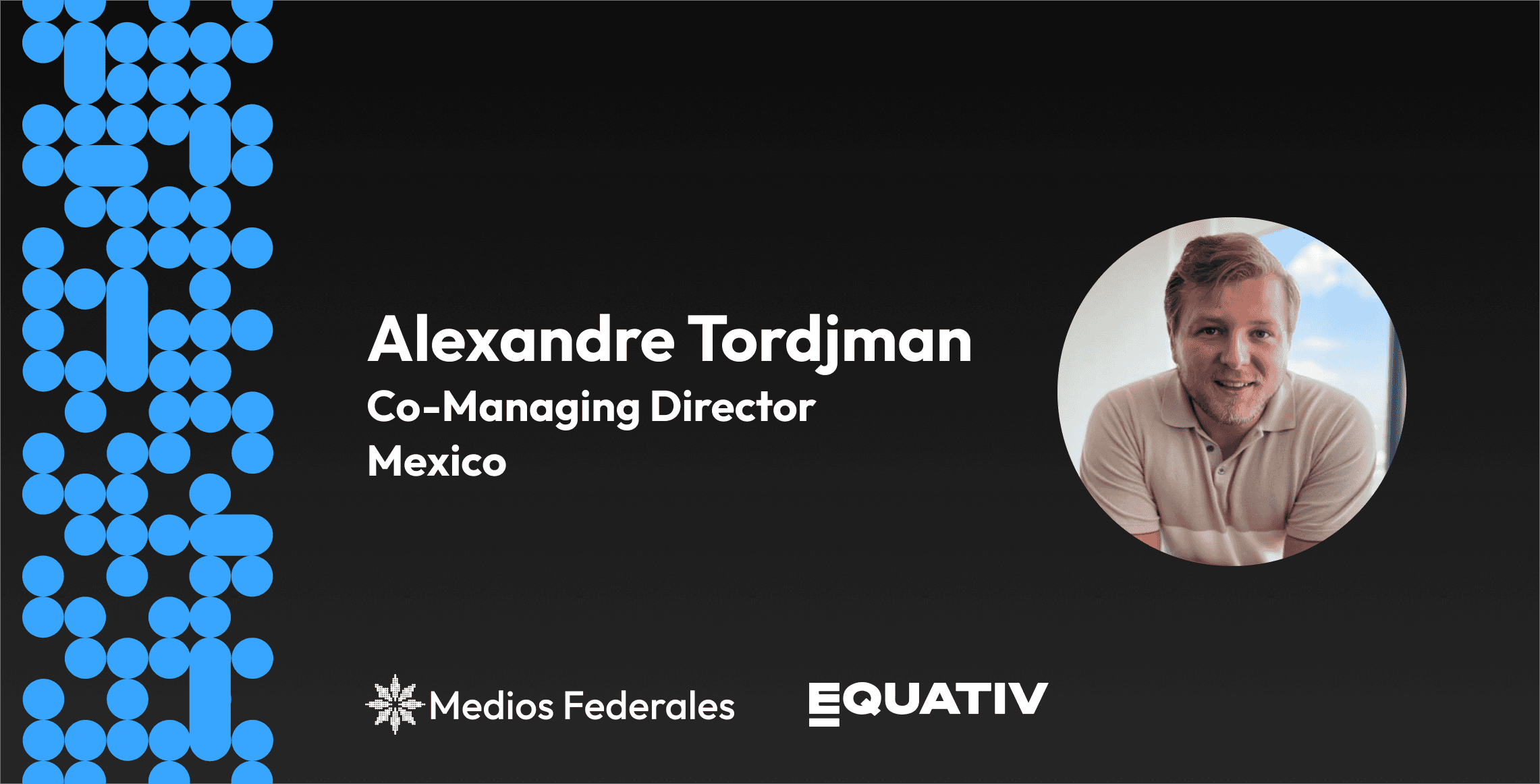
Equativ’s managing director in Mexico highlights the value of digital media in the advertising market and the opportunities local publishers have when sharing work networks to boost their inventories.
Alex Tordjman has become one of the leading experts on the digital advertising market in Latin America. Managing director of Equativ in Mexico, he leads one of the world’s largest independent advertising platforms in that country and for the region. In this interview, he discusses the Argentine media market, trends in the region, and what is coming in relation to Artificial Intelligence and advertising.
– How is programmatic advertising evolving at the regional level?
– There is a new phenomenon that is making a difference in the region. In Latin America, markets in each country had always operated “individually,” that is, they handled their own deals and their own solutions. Now this is becoming more standardized, seeking solutions that apply across the entire region in order to gain benefits at a larger scale. And this is very good.
– And does Google delaying the end of third-party cookies favor the region?
– Google delaying the end of third-party cookies is obviously a favor that affects the region, because in Latin America more than 70% of traffic comes through the Google Chrome browser. So if tomorrow Google decides to change the rules, that will impact everyone, since we are talking about 70% of the traffic.
– Is there already technology to support that change, or will we have to wait and see how it impacts things in order to develop solutions?
– Yes, the technical solution exists. There are several. In fact, they are the same, but with different protocols. There is an ID protocol, which is the final solution in the sense that it proposes that the publisher compile the data directly thanks to a universal ID. For example, in Ecuador we decided to choose each of those different processes and, on top of each of those processes, create a sort of internal ID that makes it possible to map the different criteria in order to identify all the data about who is behind those different protocols.
– So, can all the information be collected individually and identify what there is for each user in a given medium, and be able to aggregate the information even though there are different ways of collecting it?
– That is correct. Users visit different sites. If site A uses an ID protocol “five” and site B uses the “two” protocol, they are blind to each other. But if both connect to Equativ, for example, we make the connection to identify who is behind that data. The key is to consider everyone’s protocol as a plural system and not a single one.
– What innovations should we expect in the region in the short term?
– In Latin America, the biggest innovation is the use of marketplaces that allow inventory to be curated with transparency, between what the publisher sells and the price the agency buys it for. These global solutions help provide transparency, visibility, and proximity to the direct publisher.
THE ARGENTINE MARKET
Unlike the region, the programmatic market in Argentina is directly linked to economic ups and downs, which makes it much more competitive than in the rest of the countries, with more static and predictable economies, according to Tordjman.
“Competition has driven prices lower, which translates into greater buying efficiency and more volume for the same budget,” he says.
– What advantages does Equativ provide to small or medium-sized media outlets within the Argentine market, such as those that make up the Medios Federales network?
– In this case, Equativ helps Medios Federales with direct monetization and offers local support and assistance, something crucial for local media, which value and need this process to be more personalized and efficient. Having support and assistance is key for the media business with structures of this kind.
– Do media outlets remain an attractive business for programmatic advertising?
– Yes, definitely. The amount of inventory and the trust it generates among advertisers are fundamental to its continued success.
– What should media outlets improve to expand their programmatic revenue?
– Media outlets should be willing to test new solutions and adapt quickly to new technologies and formats in order to stay competitive in the market.
– At the technological level, can local media match national or regional media with larger structures?
– Yes, through associations such as Medios Federales, local media can access advanced technological solutions that allow them to compete effectively with national media.
– What is your opinion of Medios Federales?
– Medios Federales is playing an essential role in Argentina, strengthening local media and offering more specific and valuable inventory for advertisers.